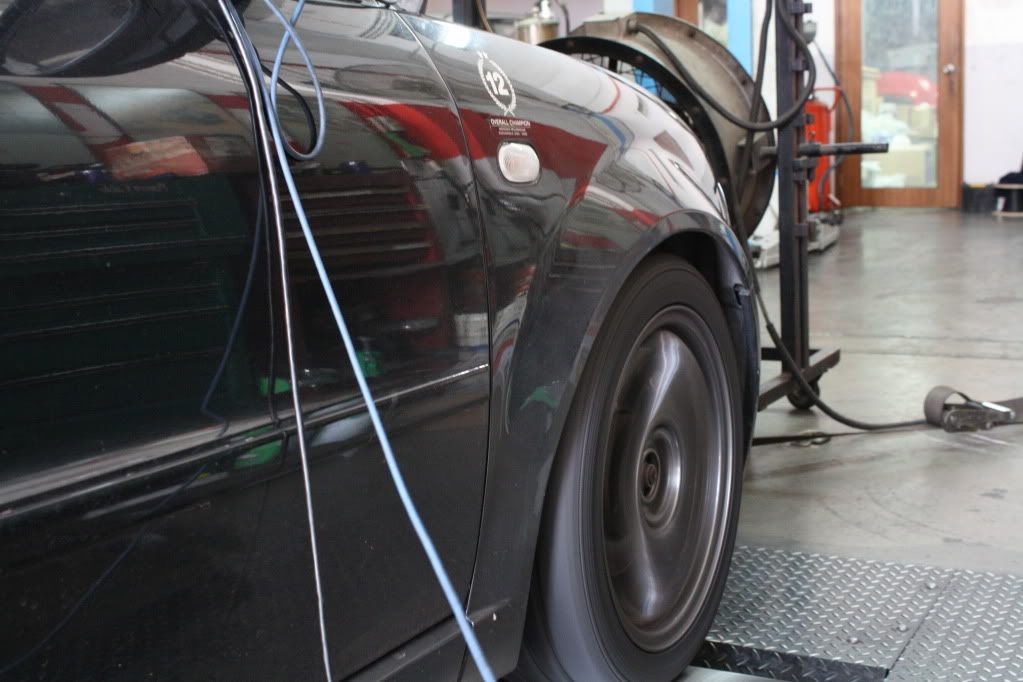
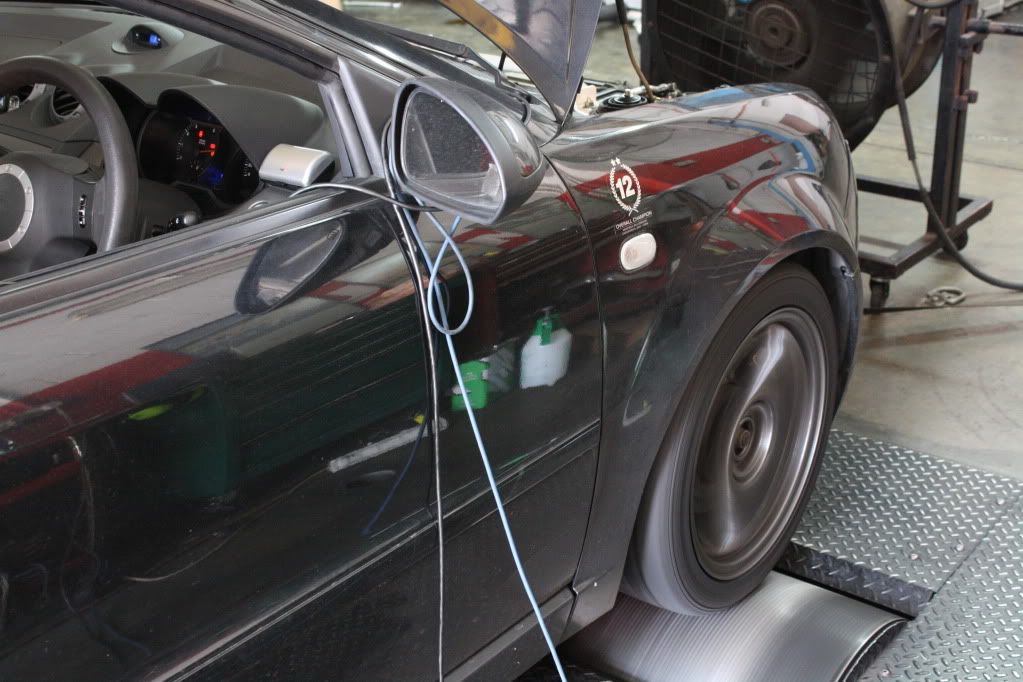
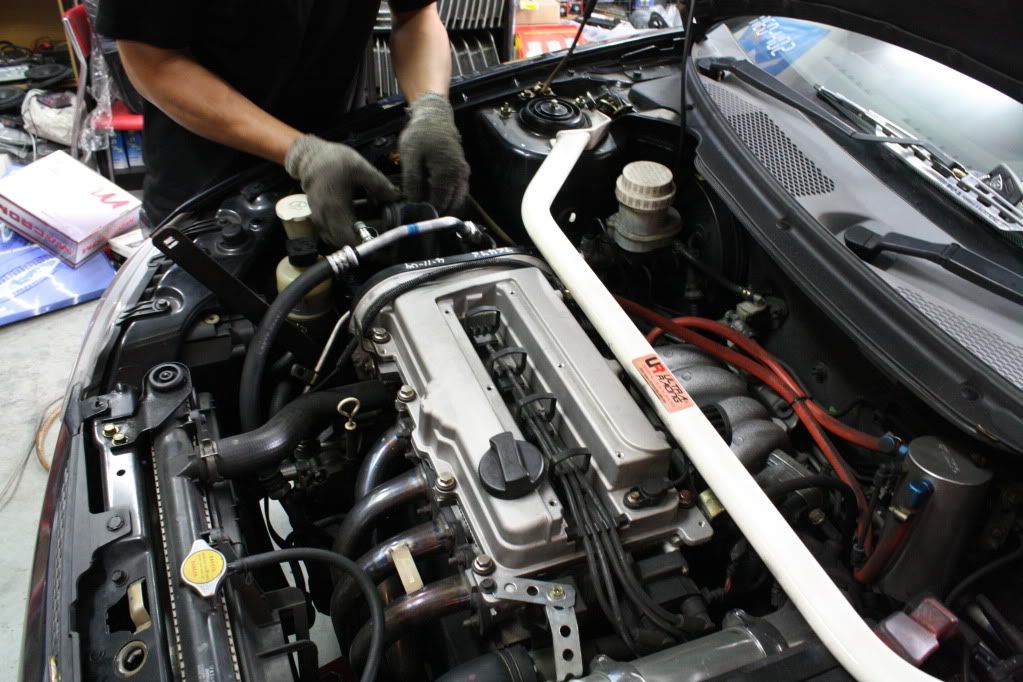
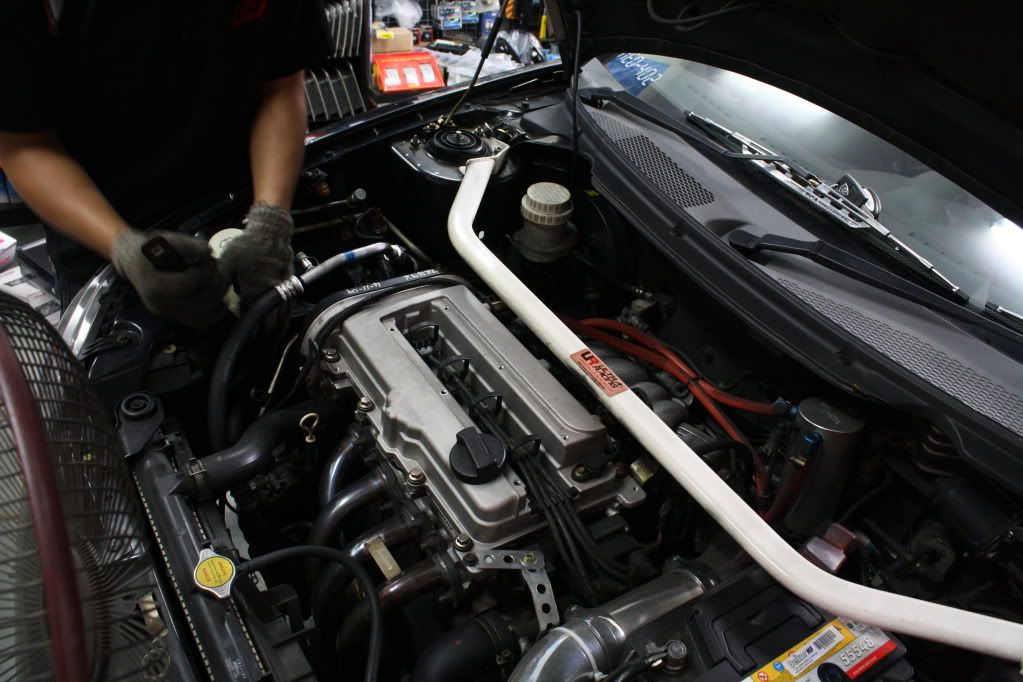
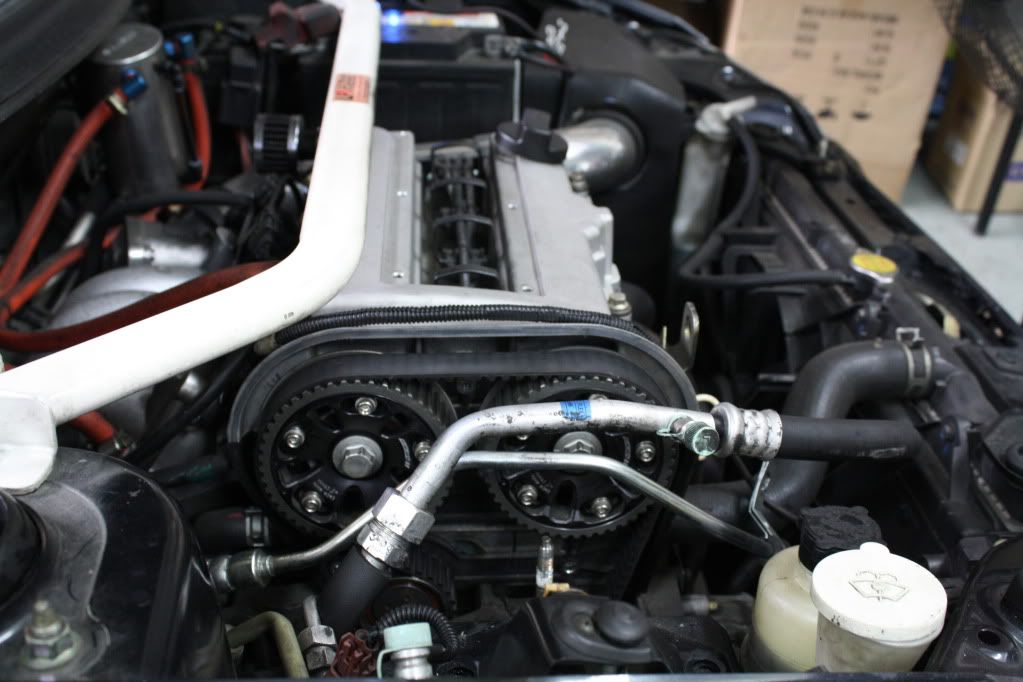
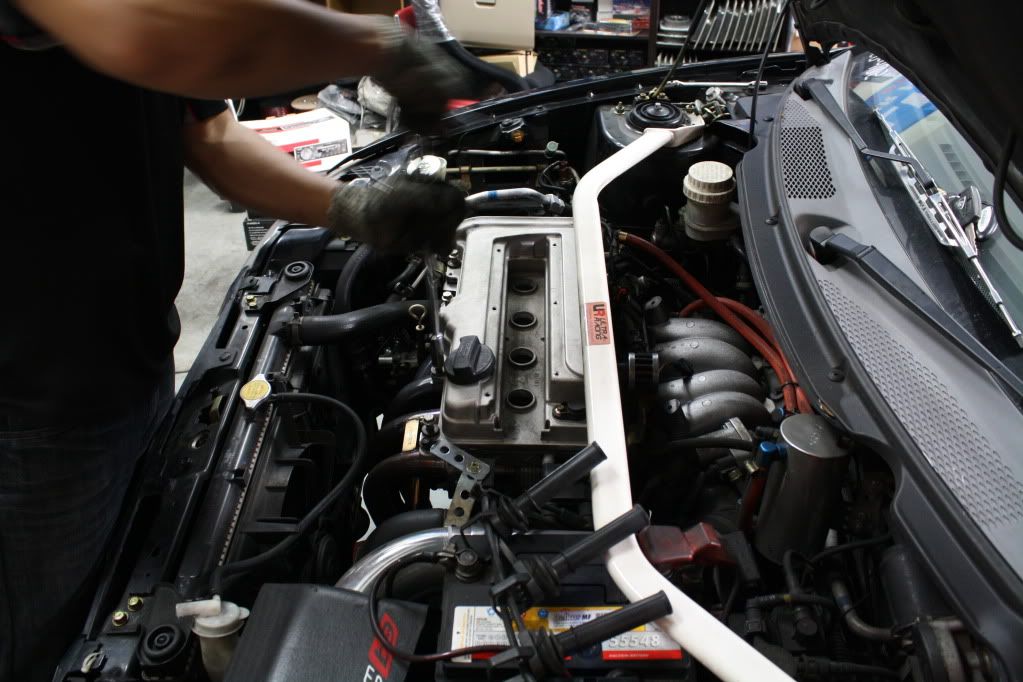
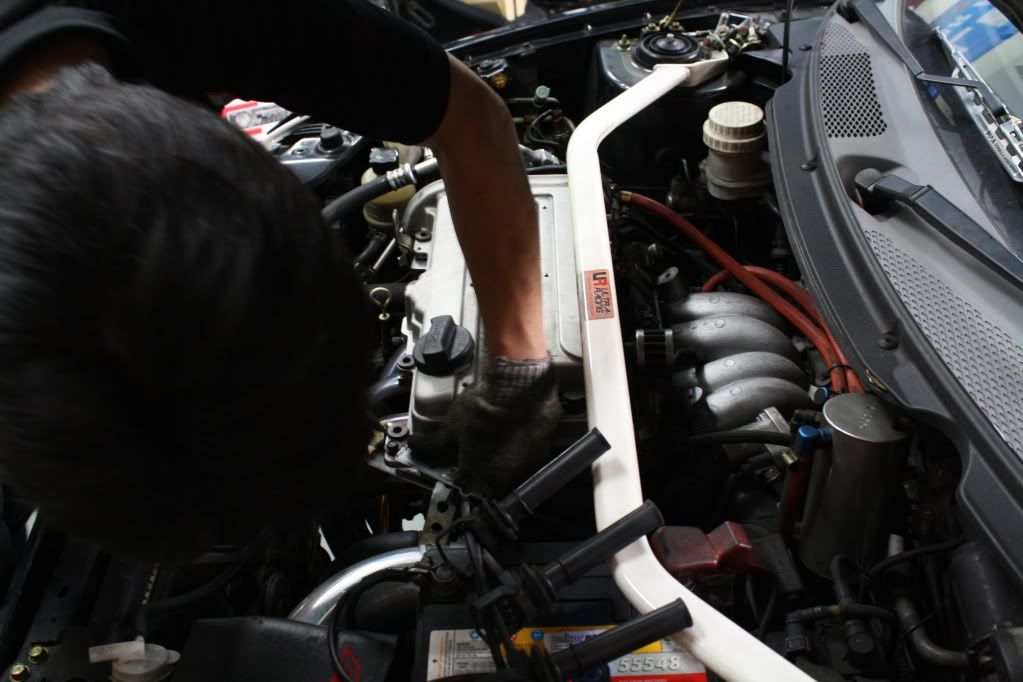
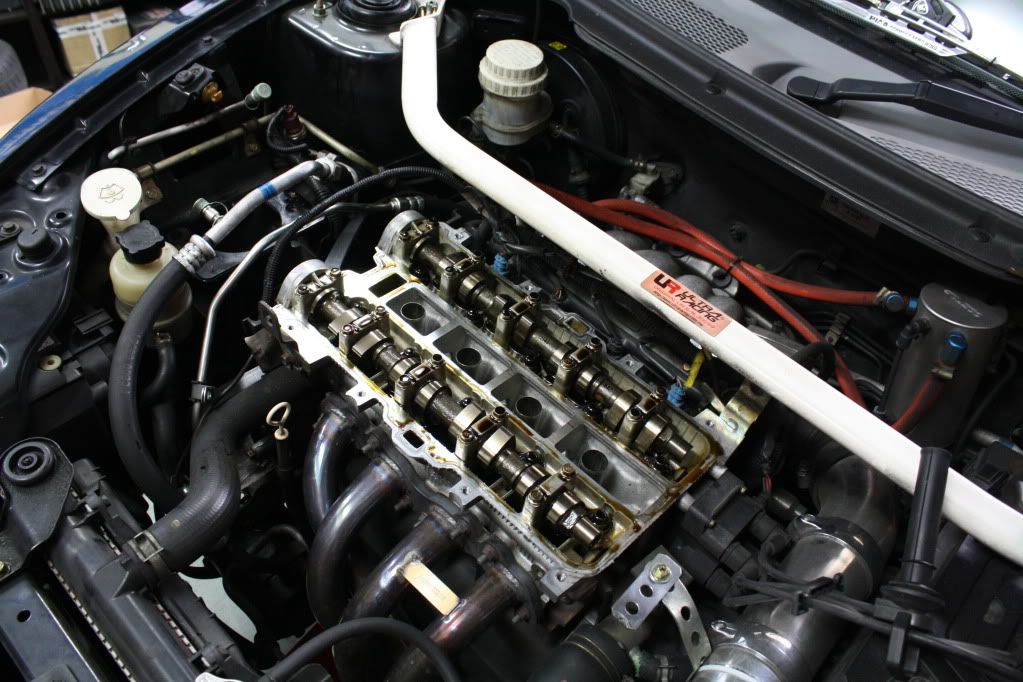
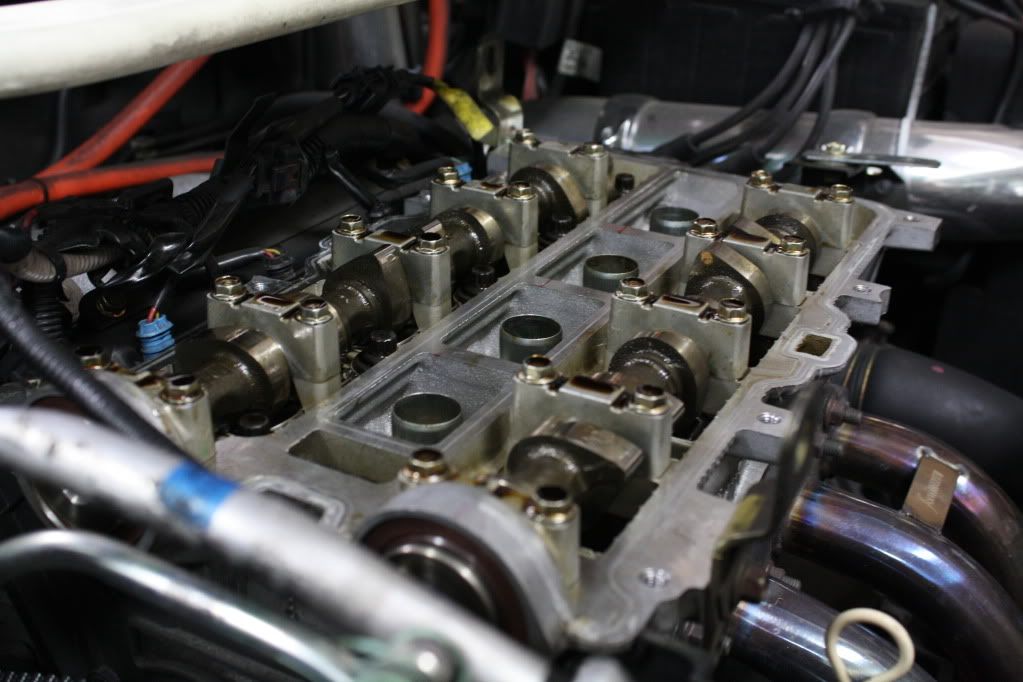
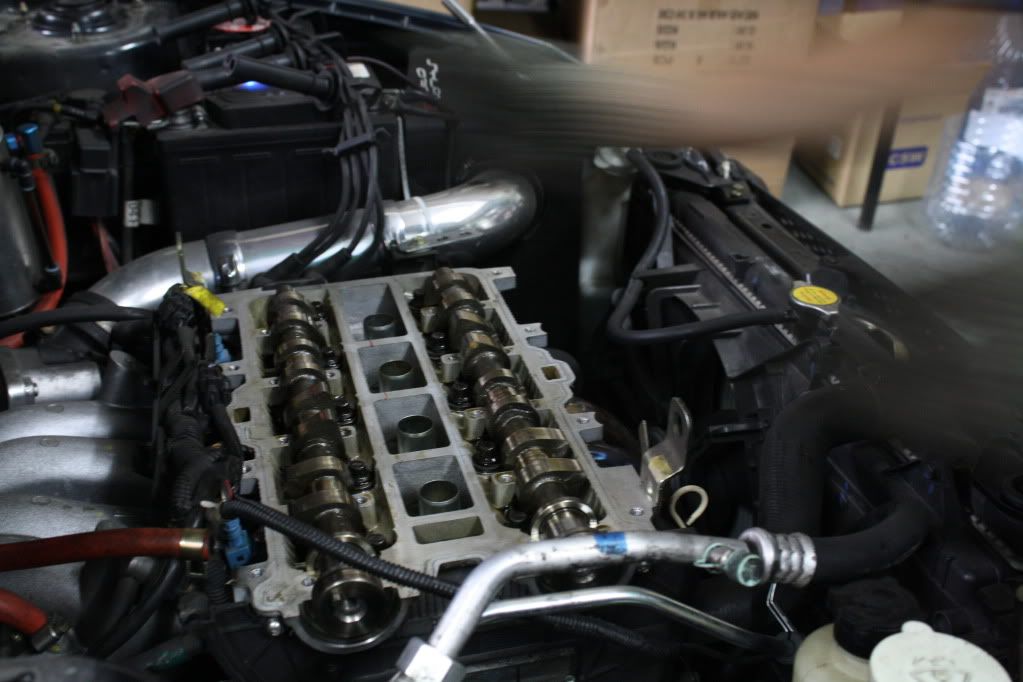
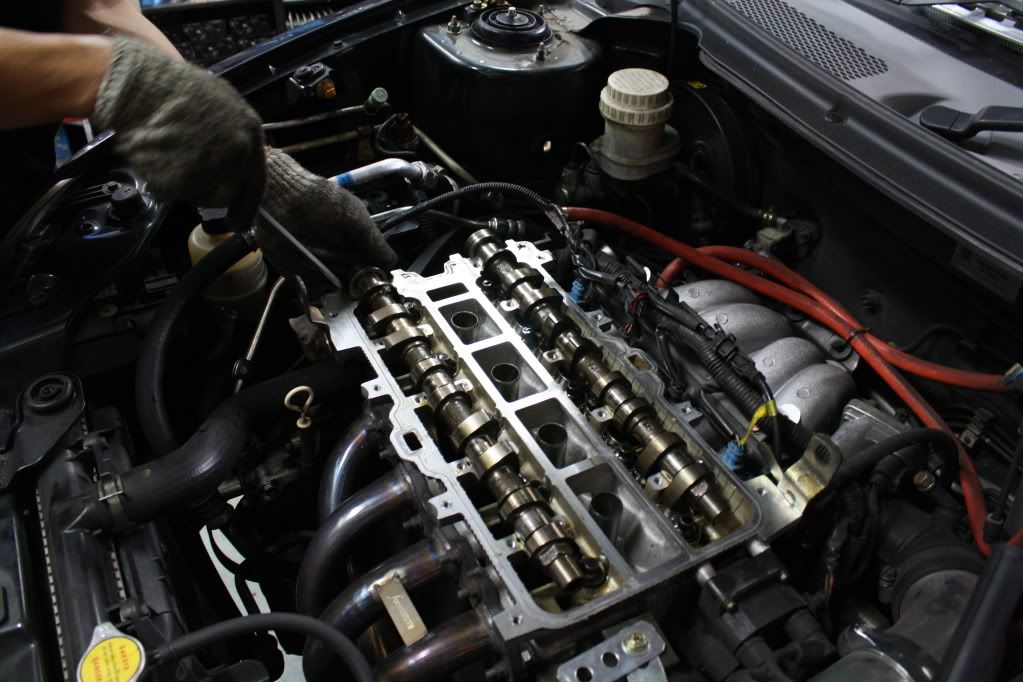
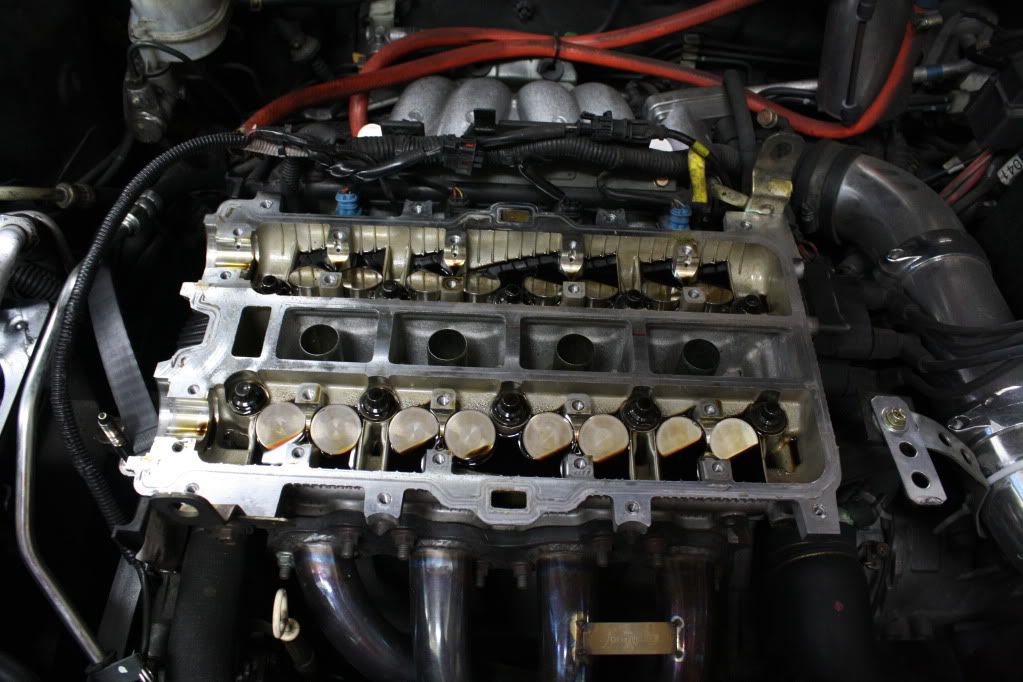
Showing posts with label Works Engineering. Show all posts

11 March 2013

Opinion: "Performance" Oil Filters - Works Engineering

Before any hardcore supporters of the brand goes amok on me, please take note that this is only my personal opinion.
If you don't like, don't read la. Easy right?
t(-.-)t

This is to share my opinion on "performance" oil filters.

Now before I go further, the product that is the center of my opinion today would be non other then Works Engineering High Performance Oil Booster Filter.
Yeah serious. That is the complete name.

If you are to ask me if oil filters increase HP, I would have bitch slap you on the spot. Serious.
How is it that an oil filter is able to increase the power of your engine? 
Do they even know what they are doing?

First a failed camshaft. Story here.
Now this?

For those that are not in the know, basically how engine works is like this. 
When you do an oil change, you basically release back the lost engine power that is lost and this will make you feel as though as your engine is making more power. 
In ACTUAL fact, you are just gaining back all your lost power since the last oil change.

How?
As your engine oils gets dirtier (from giving protection to your engine parts, DUH!), you lose efficiency and thus in the process, losses a couple or so HP/Torque. That is why you hear people complaining about engine being sluggish and such but once an oil change is done, the engine felt better and more responsive.
This is an on-going process.

Simple car maintenance 101. It will not get any simpler then that.

Now lets relate to the mentioned product. 
Notice how it say that you need to do the following:
"However, to maintain optimum low pressure loss properties, it is recommended to change the filter every 3000 km when an oil change is performed."

Basically what it say is to recommend a user to do an oil change every 3000 km in order to feel the filter effect.

Isn't this bullshit plain and simple?
A regular oil change interval is 5000 km and to use this filter, you do it at every 3000 km instead?
Shorter interval means fresher engine oil means more responsive engine means u have less power loss means you feel you have more power when in fact you are actually minimizing the power loss due to dirty engine oil.
Please do some thinking here.
1 + 1 = ?

So now to claim that an over-priced oil filter is able to add HP, in my opinion, would be a plain con job.
Not sure about you but I am surely not falling for this con.


13 June 2012

Works Engineering Preve: Will it really work?

Will this works work or will it be worked?

LOLOLOLOLOL
Certain readers will understand.

Works engineering... the question is... are you sure?

08 August 2011

[Review] Works Engineering Performance Billet Camshaft Review - Part 3

Read Part 1 here.
Read Part 2 here.

Finally its time for the figures to be revealed.

*Drum rolls*


As mentioned previously, a dyno run is done before the installation of the performance camshaft so that we know roughly how much gain we will get.

This is the figure that we have prior to the installation of Works Engineering Performance camshaft.


After the dyno, the camshaft is then installed into the car as per Part 2 here.

Unfortunately, an incident happened a couple of days later.

What is it?
My engine blew while cruising home on Federal Highway.
This is where things start to get interesting and this incident deserve a post by itself.
So be patient and the story will be unfolded to you.

To cut a long story short, since the engine blew, I have no choice but to rebuild the engine again and this engine rebuilding warrant another post by itself.
The juicy details will be shared there. So once again, please be patient.
=P

After the engine is done being rebuild, it is then back on to the dyno to get a stock reading.


The process is repeated. Works Engineering Performance Camshaft is then re-fitted and this time, everything looks fine on the surface.
The performance camshaft is then allowed a grace period of 1 week to so-called "run-in".

Then its time to hook the car up on the dyno and check out the power gain.


By now, sharp eye reader will notice that something is not right somewhere.

Let me show it to you.
(I know you all are dying to know) =P

Suffice to say, the result is indeed shocking. Friends who were with me are also shocked non-the-less.
How shocking is this?
Check it out below when I overlap the stock and Works Engineering Performance Camshaft readings.


The Green line is the stock readings.
Red and Blue is the reading for Works Engineering Performance Camshaft.

Indeed a shocking result and even the tuner has nothing to say but just smile.
I too was shocked beyond words.

Power gain is almost nothing and instead I totally lost power across the entire RPM range.
Tuning was done by adjusting the cam gears and it brought no improvement. Power is still lost across the entire RPM range.

Consultation is done here and there. Phone calls are made. Views and information are exchanged but the result is still the same.
Power loss across the entire RPM range.

We then gave up and unhooked the car from the dyno.

Plans is then made to return Works Engineering Performance Camshaft for a refund.

After much hardship, time and money spent, the result at the end of the day is totally disappointing.
The performance camshaft did not function as it is supposed to.

Conclusion is?
This product fail and it failed big time.
Initial theory looks promising but when it is time to delivery, Works Engineering Performance Camshaft fall real short of its target.

My advice?
Don't even consider this product. Simple.
The after sales service from the distributor is equally horrible and disappointing.

But I'll leave the judgement to you guys. You guys decide if it is worth it.

Cheers.

03 August 2011

[Review] Works Engineering Performance Billet Camshaft Review - Part 2

A long delayed post on my experiences and review on this product.
So sorry for that.
Finally got my lazy ass around to post up part 2.

You can refresh your mind by viewing part 1 here.

As mentioned previously in part 1, I was hooked and decided to give this product a try in my own humble Satria Neo.
First time in my life playing with cars that I've actually change the parts inside the engine head itself.

So where else to get this thing installed?
It is done at my usual place. EA Autoworks.

As this is a first installation, we have come up with the following plan to see how much gain will this camshaft provides.
Before installing the camshaft, we will send the car for a dyno first to get a reference figure.
After installation, we will then hook the car up on a dyno again and then the power output.

An appointment is then made to get this thing installed on to my car.

As planned, a dyno run is made first at GT Auto in Sunway.
Sorry figure will not be disclosed for now.


Then it is off to EA Autoworks for the installation.

Drove the car into the reserved area and work begins almost immediately.

The engine mounting is removed to gain access to the crank pulley.


Loosening the crank pulley.


Cam cover removed.


Spark plug cables removed and time to loosen the engine head.


Removing the placeholder of my intake kit.


Engine head removed.


Head bolts require removing before the camshaft can be taken out.


Head bolts gone.


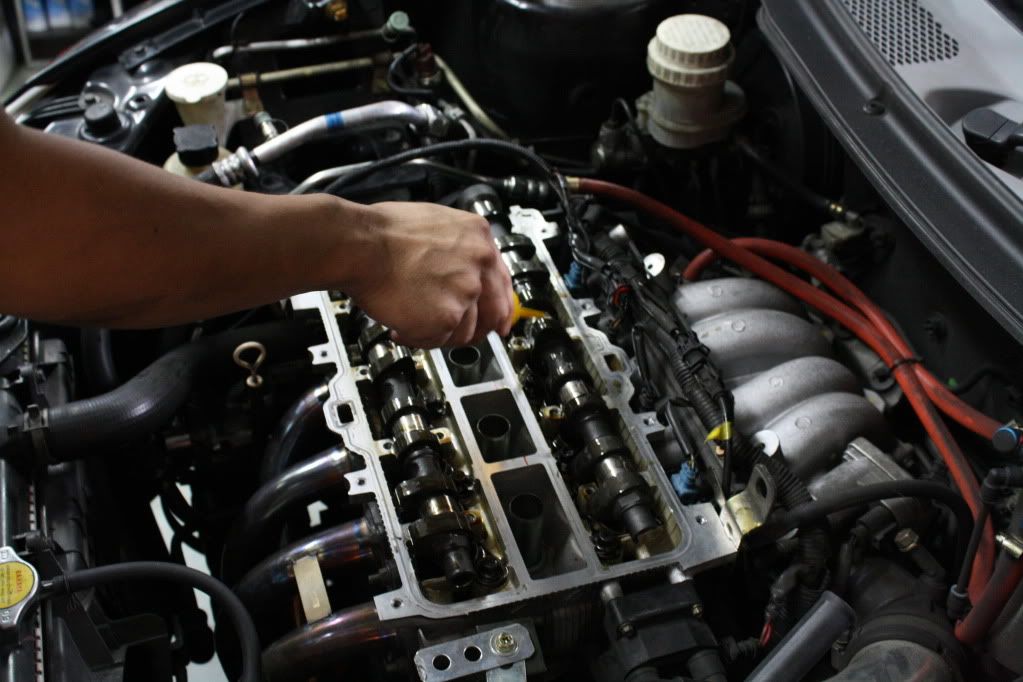
Taking out the stock camshaft.


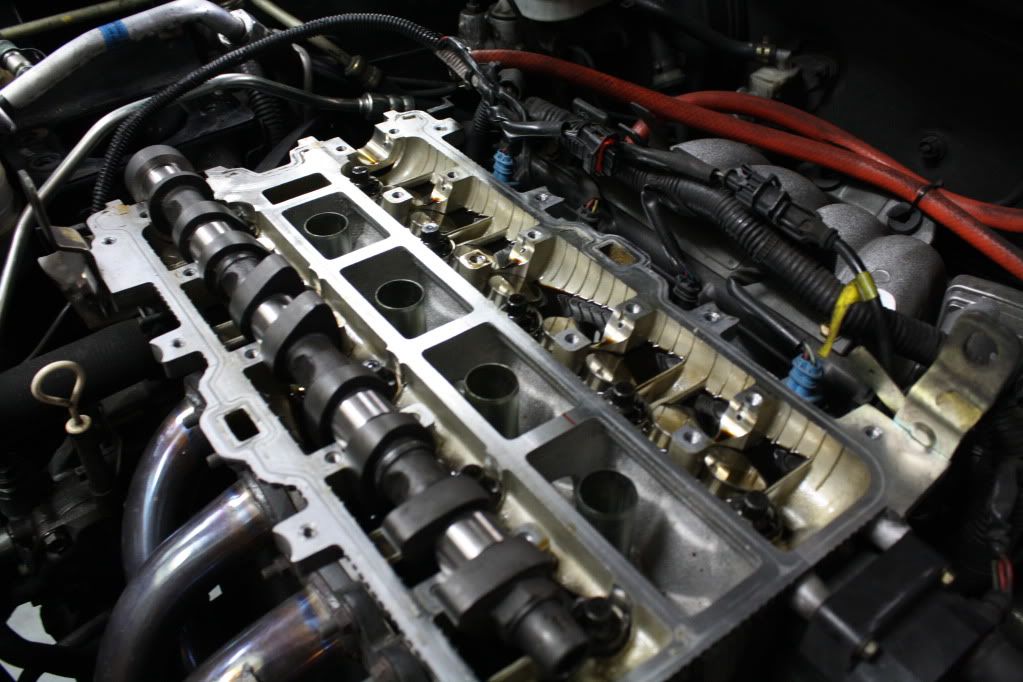
Camshaft gone !! The hydraulic tappets as seen here.


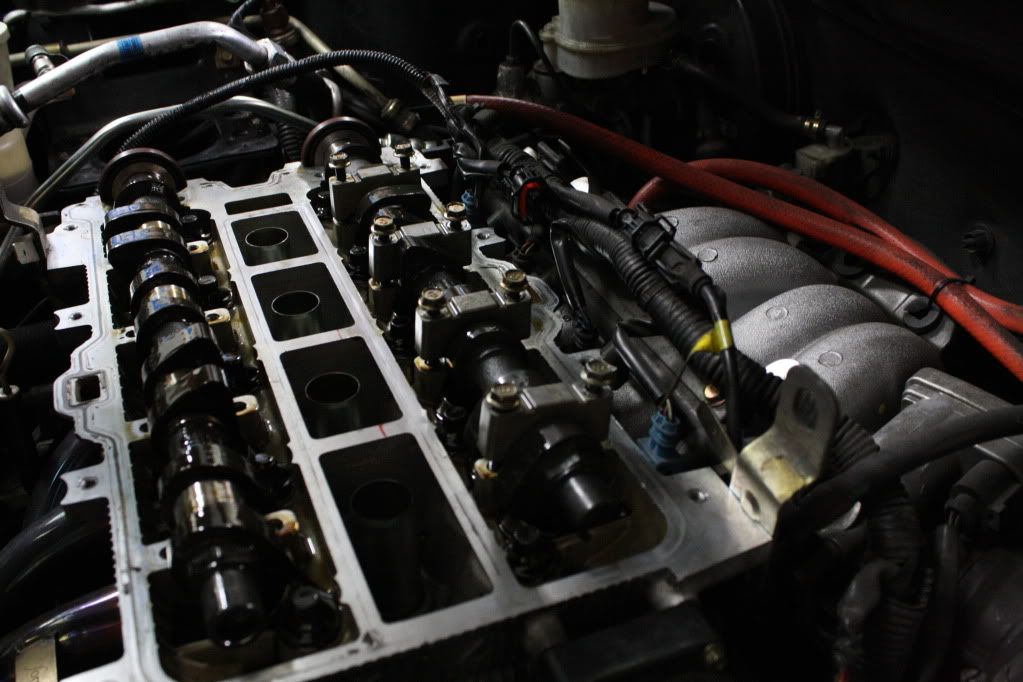
Inserting the exhaust part of the camshaft. Looking sexy eh?


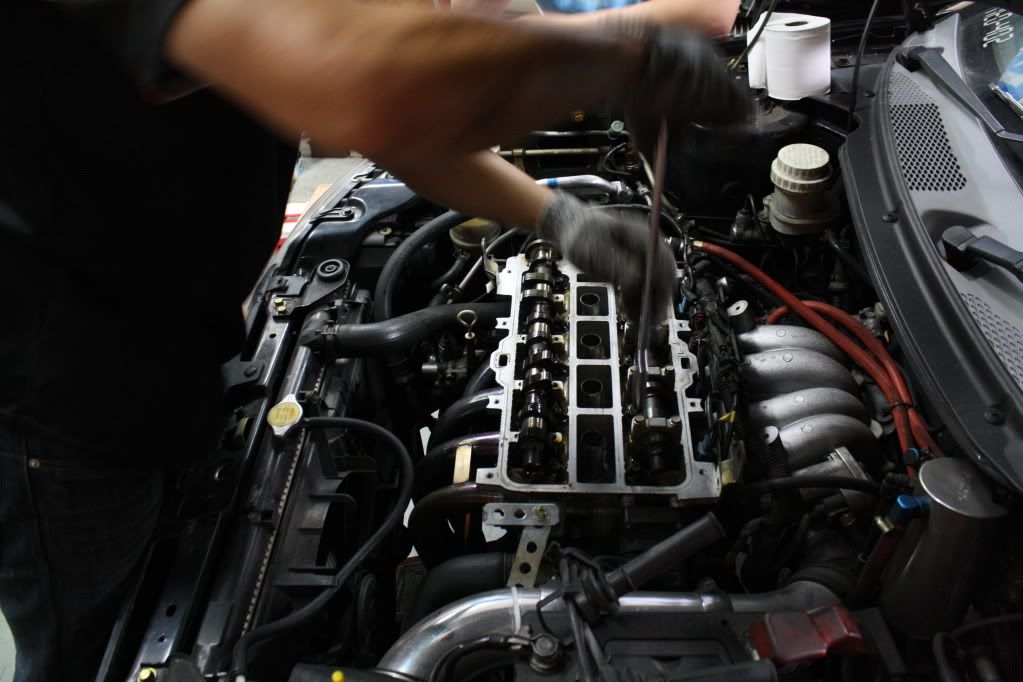
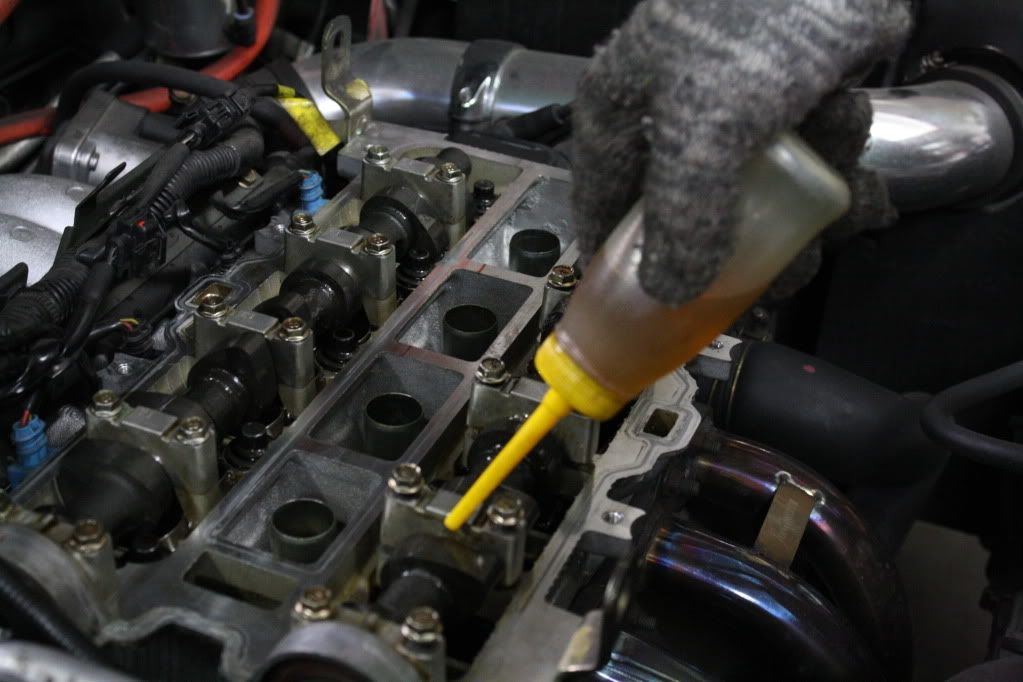
Intake and exhaust camshaft installed and being lubricated.


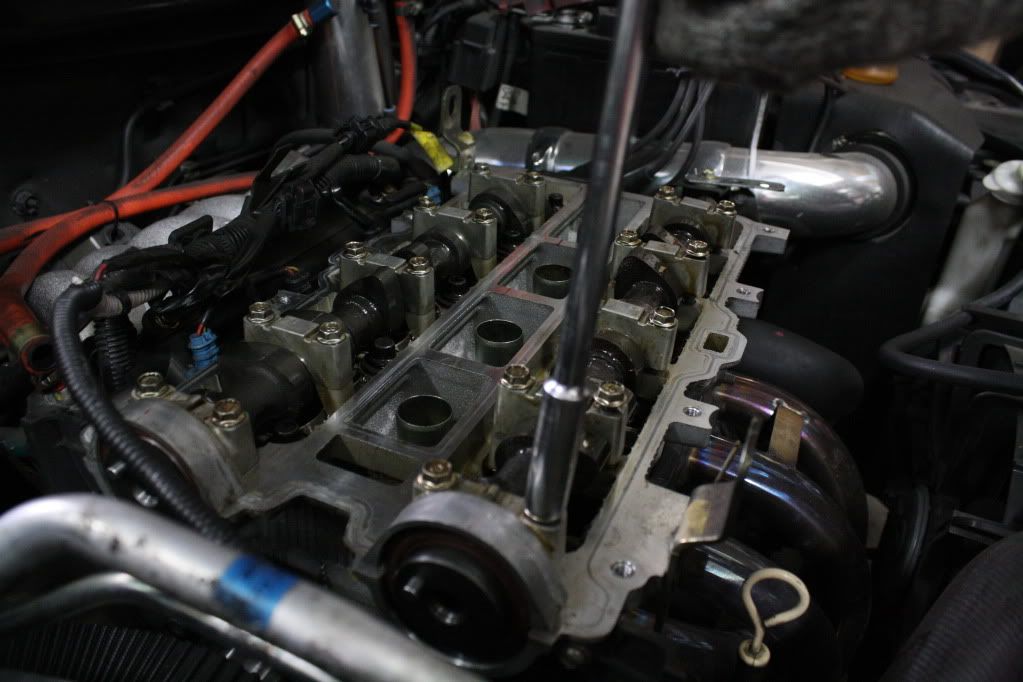
Head bolts being placed back on.


Tightening the head bolts in place.


Lubricating the head bolts.


Checking the head bolts.


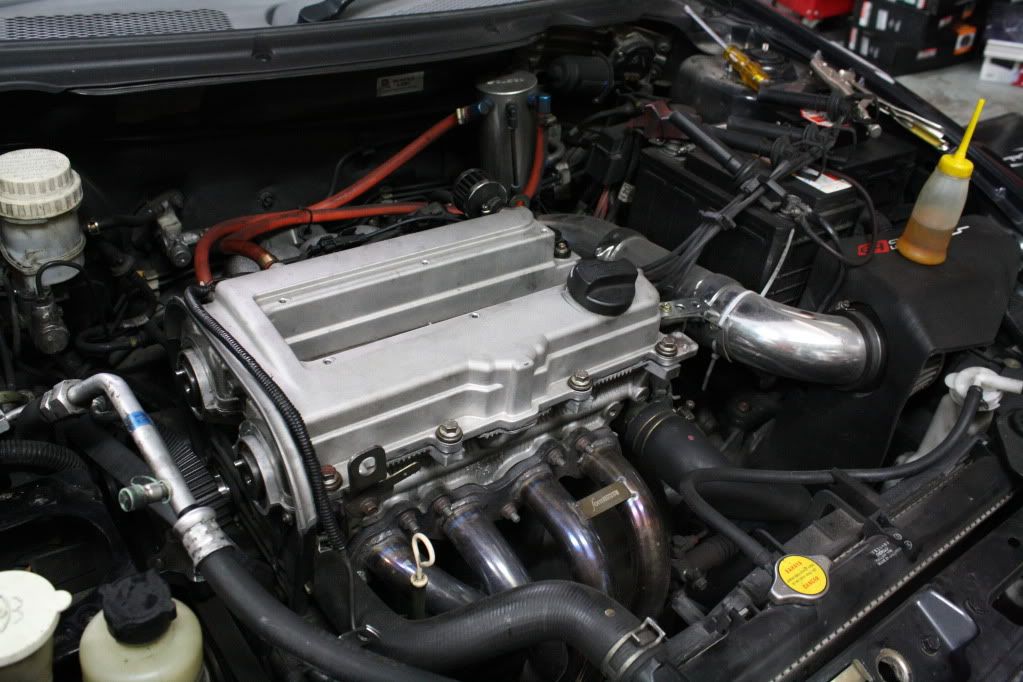
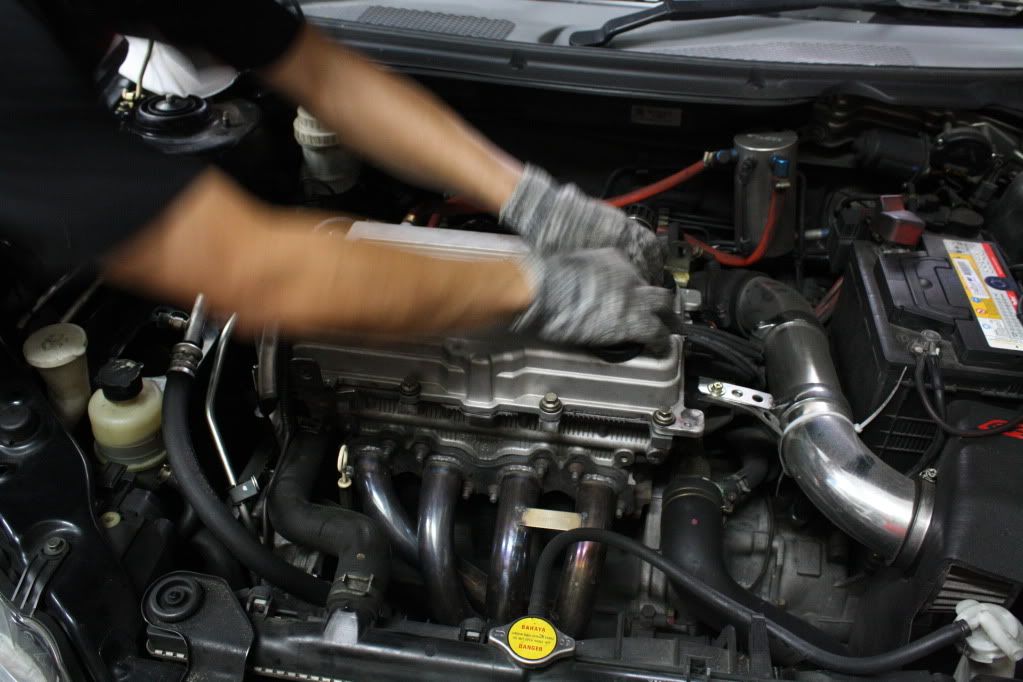
Engine head cover back on. Moment of truth is getting nearer.


Spark plug cables being put back in place.


Cam gears back in its rightful place.


Checking all connection.


Tightening the engine head back in place.


Tightening the crank pulley.


The camshaft is then tuned using the adjustable cam gears that I already had installed a long time ago. The cam is then tuned accordingly until a smooth idling is achieved.

After everything is done.


Everything looks fine and dandy right?
Now its time for the million dollar question.

What is the gain like?

This my dear readers, will be made known in part 3 where the full experienced of this product in whole shall be revealed.

Stop the guess work. It has been revealed.
Part 3 here.

22 March 2011

[Review] Works Engineering Performance Billet Camshaft Review - Part 1

What is a billet camshaft?
Billet Camshaft is made from a semi finish solid metal form.
In theory, an engine camshaft if made from billet, it will give very good high-end performance if fitted to an engine.

With a billet camshaft, a manufacturer will be able to determine exactly when the opening and closing of the valve will be, how long the duration of the lift will be and last but not least, how much will the overlap be.

Keeping in mind the above, depending on how the billet camshaft is profiled, the performance will vary.

Google will be your best friend to read up on more details.

The product that we will be reviewing today will be non other then Works Engineering Performance Billet Camshaft.
Why this particular brand?
Because Works Engineering has been developing products particularly for this specific car model which coincide with the car that I am driving now.
Which is a Proton Satria Neo.

They, Works Engineering, even purchased a Proton Satria Neo for their product development purposes, as seen in the pictures below.

Initial assessment of the performance camshaft by people in the automotive industry is very positive based on the specification of the camshaft itself.

How is this Works Engineering Performance Billet Camshaft different from others out there in the market?
Take some time to study the information below.

Diagram shows 61 degrees of overlap which in theory will translate to a very rev-happy engine.


Image above shows the different part of a camshaft.

Below is the information with regards to the diagram above.
Works Billet Cam:
base circle 36mm (same with stock cam), lobe lift 10.6mm (1.1mm higher than stock cam), broad nose, curve flank, short ramp.

Brand M reground Cam:
base circle 34mm (2mm smaller than stock cam), lobe lift 9.5mm (same with stock cam), sharp nose, flat flank, long ramp.

Finally, the diagram below shows the difference between stock camshaft, regrind camshaft and billet camshaft.
Too much technical information to digest?
Me too.
But I will be glad to introduce someone to you who can explain everything clearly to you.

Anyway, from the above technical detail and description of Works Engineering Performance Billet Camshaft, everything sounds and looks good on paper right?

It has all the right specification at the right place, all chart and graph shows that it is superior in every way.

Now for the million dollar question, how will the real world performance be?

Part 2 here.
Part 3 here.

====
Note:
Picture and technical information credits to Drex Chan of EA Autoworks.

21 March 2011

[Preview] Works Engineering Performance Billet Camshaft Review... Coming Soon !!


As mentioned in this post here, the full review will be coming soon once the pictures are in place.

A sneak peek of what will be reviewed.

The product.
Photobucket

The car.


Stay tuned.


Excited eh?
:D

Note:
Picture credits to Drex Chan of EA Autoworks.

09 February 2011

[Preview] Works Engineering Performance Billet Camshaft

A preview is coming up soon on this.


Picture credits to Drex Chan of EA Autoworks.

SPOILER !!
I finally got this product out from my car.
My car felt very much livelier now and more eager to go all across the REV range.

Stay tuned.....